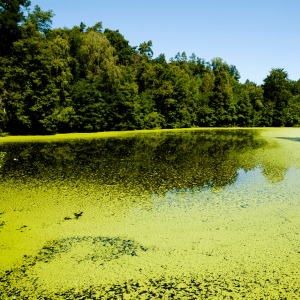
Overgrown or inadequate vegetation and algae can have a significant impact on the success of your pond. Whether floating, on land, or submerged, we are very familiar with different species of weeds, algae, and other nuisance vegetation. Our goal is to eliminate unwanted vegetation from in and around your pond quickly without harming the ecosystem or the animals inhabiting it.
Knowledge and care must be taken to identify all the plants inhabiting your pond. Some plants are beneficial and may want to be encouraged, while others may be harmful to your ecosystem. Common removal options include hand or machine removal, eco-friendly herbicides, nutrient reduction, and grass carp stocking.
Types of Vegetation:
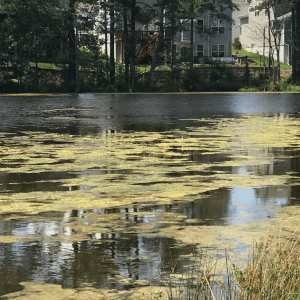
ALGAE are some of the most basic, oldest, and most confusing types of aquatic vegetation. They have no real root system, can form extensive mats that drift across the surface of your pond, and can provide resources for the entire food web of your fishery.
Some species can emit toxins that are harmful to fish and wildlife.
FLOATING VEGETATION refers to plants that float on the surface of the water. The roots of these plants are not buried and they pull nutrients directly from the water.
These plants can drift all over your pond, which allows the population to spread and have a wide distribution in multiple areas of your water body.

SUBMERGED PLANTS are rooted in the substrate of the pond floor. These plants provide habitat for your fish to evade predation, as well as are an excellent food source for waterfowl.
If there is a large enough quantity, this can drive the oxygen levels down to the point that there is the potential for a fish kill.

EMERGENT VEGETATION can include plants that are on land or out in open water. These plants are rooted in a substrate, whether it is the pond floor or the bank, and have the majority of their plant mass out of the water.
These plants help to keep the bank from eroding away as well as slow down the water from rain events.
The fish in your pond need cover to hide, feed, or hunt but we know natural vegetation is sometimes difficult to control in any body of water. We can help in improving Fish Cover in your pond – naturally or artificially. The fish cover vegetation helps provide much needed refuge for small fish and the perfect hunting ground for larger fish. Artificial fish habitats offer the benefits of submerged natural vegetation without the concern of disrupting your ecosystem.
Fertilization can help by producing phytoplankton (which give the water a greenish color and reduces the amount of sunlight that can penetrate to the bottom of the pond). Limiting sunlight limits the amount of vegetation that can grow on the bottom of your pond. Aquatic dyes are another option, and function in a similar fashion to that of fertilization.
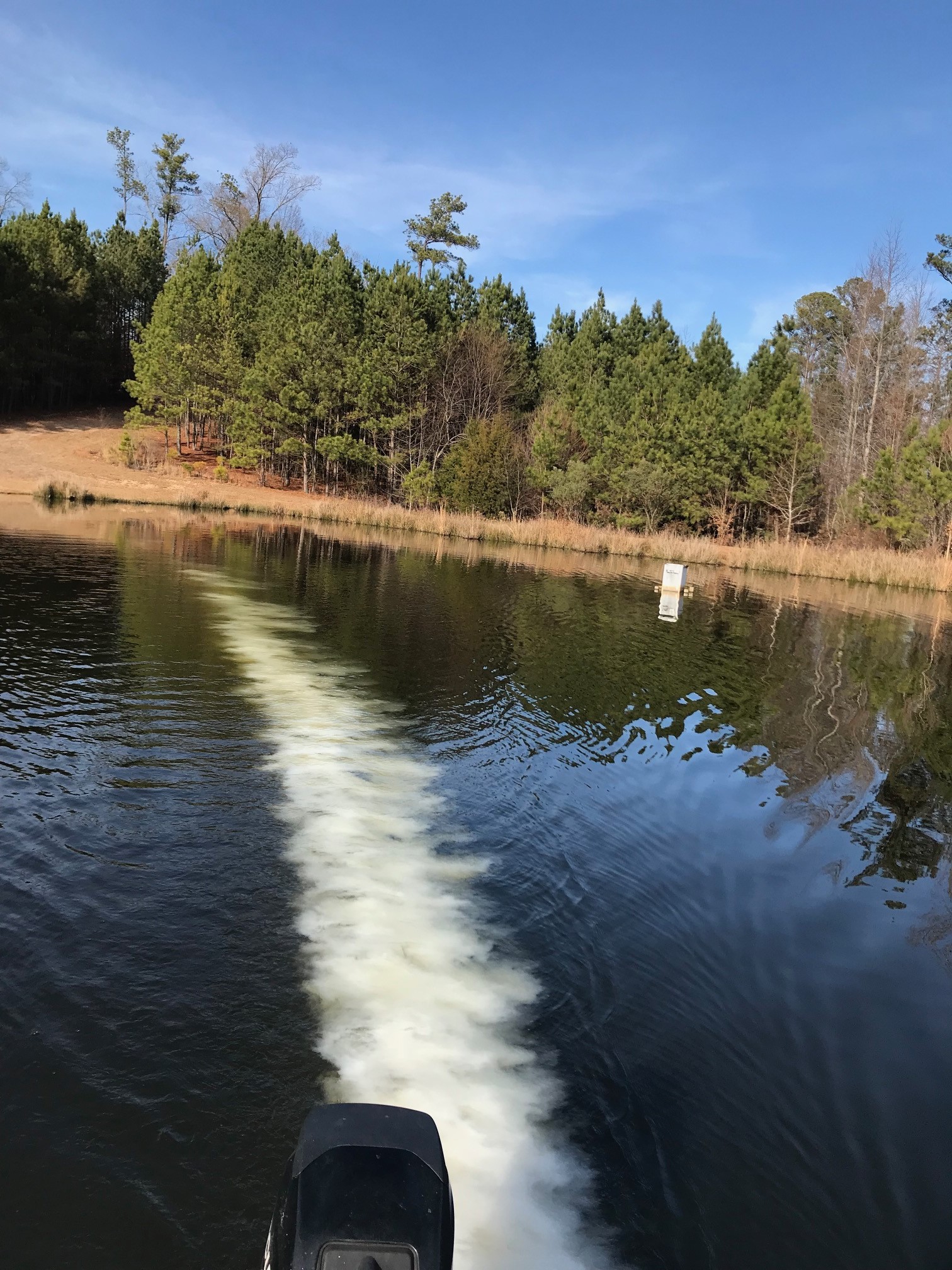
DO I NEED TO LIME MY POND?
Contrary to popular belief, fish don’t like clean water. Fish have salt in their blood, and if their external environment is too different from their internal environment, they have to fight continuously to keep the salt in and the water out. If pond water is too pure, you should add agricultural limestone.
Liming provides major benefits. It reduces the acidity of pond bottom soils, makes nutrients more available, and increases the alkalinity and hardness of water. As a rule of thumb, if you need to lime your garden or food plots, you probably need to lime your pond. Liming is especially important if you plan to fertilize to increase fish production, as the fertilizer will not be utilized effectively in acidic waters.
Liming increases dissolved minerals in the water, which reduces stress on fish over the winter. Fish in acidic water with low alkalinity and hardness are more likely to get sick. We recommend checking to see if your pond needs liming once every five years. The best time to lime is in the fall and winter because it may cause a temporary drop in pond fertility and limestone dissolves slowly.
Pond liming can also help to enhance plant growth. Aquatic plants require certain nutrients in order to grow properly, and these nutrients are often more available in water with a higher pH level. Additionally, the calcium present in limestone can help to improve plant health and encourage strong root growth.
 Piedmont Pond Pros